
The short version
- A UGC creator can be paid without an audience because the brand is often buying a content asset, not distribution to the creator's followers.
- The base transaction is usually a fee for producing a photo or video, with additional value coming from extra versions, usage rights, paid-ad permissions or recurring work.
- Follower count starts to matter again when the deal includes posting on the creator's account, partnership ads, affiliate sales or a platform program with eligibility thresholds.
- A strong portfolio, reliable production and clear commercial terms can matter more than reach for content-only UGC work.
- Usage, ownership and disclosure terms deserve as much attention as the creative fee because they determine how the finished content can be used.
UGC separates creation from distribution
The easiest way to understand paid UGC is to compare it with a sponsored post.
An influencer deal usually buys two things at once: the content and access to the creator’s audience. The creator makes the post, publishes it to their account and charges partly because people already follow them.
A content-only UGC deal can remove the second half completely.
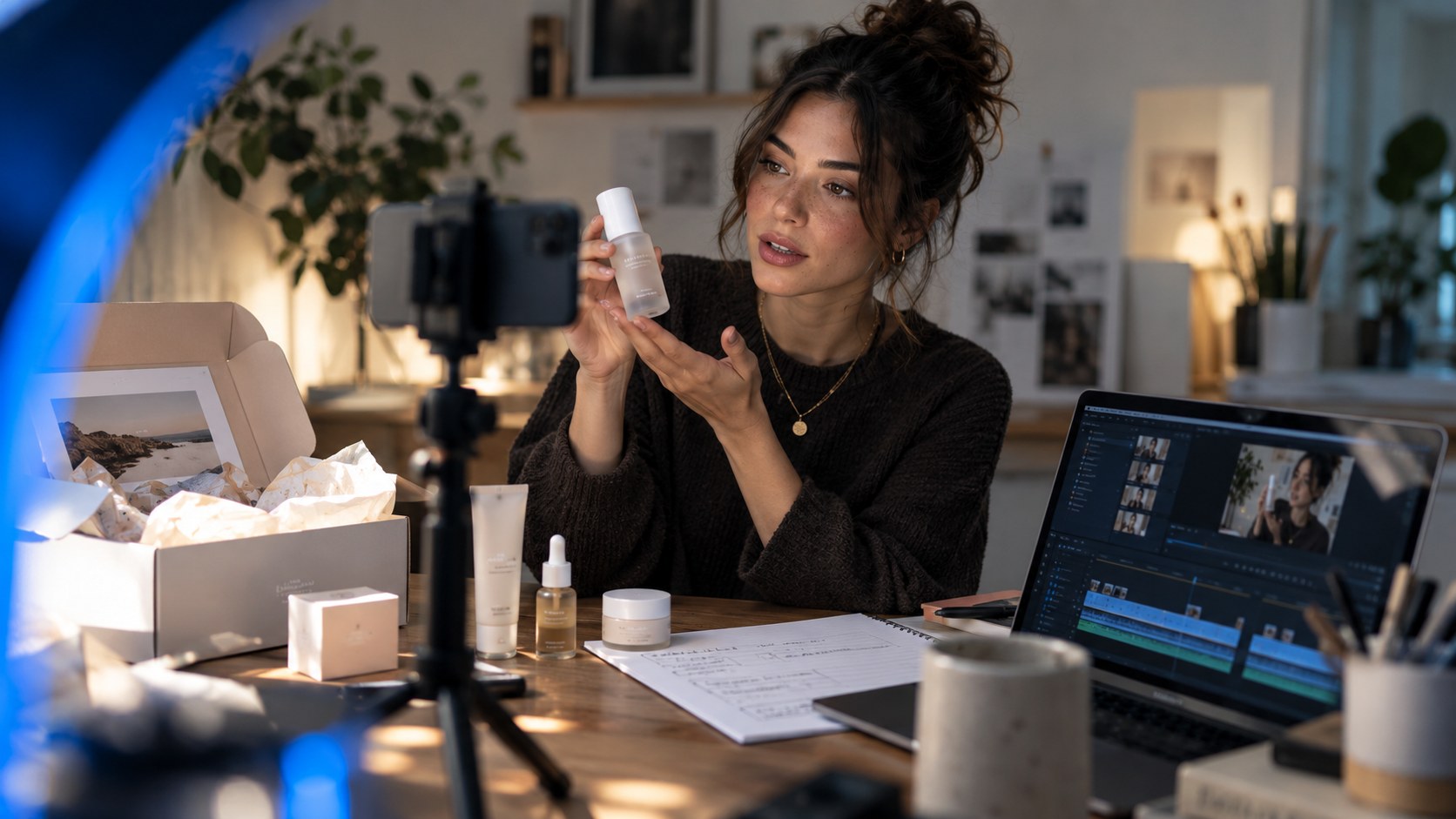
The creator films the product demo, testimonial-style clip, unboxing, tutorial or lifestyle scene. The brand receives the finished asset and publishes it on its own account, product page or advertising campaign. The creator may never post it publicly.
That is why a person with almost no audience can still get paid.
They are not selling reach. They are selling production.
This is not just creator-economy shorthand. JoinBrands explicitly separates “UGC” jobs from social posting, describing its UGC marketplace as content-only campaigns where creators make photos or videos without publishing them to their own social media. Billo likewise tells prospective creators that no following is required to start.
The creator still needs to be convincing on camera. They may need to understand hooks, pacing, product demonstration, lighting and short-form editing. They just do not necessarily need thousands of people waiting to watch.
The first payment is for the asset
At its simplest, a UGC job looks more like freelance creative work than influencer marketing.
A brand writes a brief. A creator agrees to make a defined deliverable. The creator shoots it, edits it and submits the file. Once it is approved, the creator gets paid.
That base fee can cover one video, several photos, a bundle of assets or another defined package. There is no universal UGC rate because the work is not standardized. A 15-second product demo filmed at home is not the same job as a multi-location video with several hooks, scripted voiceover and multiple edits.
The important point is what the fee is attached to:
the work produced, not the number of followers behind it.
Billo’s current brand pricing model makes the structure unusually visible. Brands buy videos and can add extras such as additional hooks or variations. The creator is functioning as a small piece of the brand’s production pipeline.
A portfolio therefore matters more than a follower count for this kind of brief. The buyer wants evidence that you can make the thing they are about to purchase.
One video can contain several different things to sell
“$X for a video” sounds simple until the brand wants to do more with that video.
A useful way to think about UGC income is as layers.
| Revenue layer | What the brand is buying | Does an audience matter? |
|---|---|---|
| Creation fee | The finished photo or video | Usually no |
| Extra hooks, edits or versions | More creative assets from the same shoot | No |
| Usage or licensing | Permission to use the content in agreed places or for an agreed period | No |
| Organic posting | A post on the creator’s own account | Yes, at least somewhat |
| Partnership / creator-handle ads | Permission to advertise using the creator identity or post | The account matters; raw follower count may or may not be the main value |
| Performance / affiliate compensation | Payment tied to ad spend, sales or another result | Depends on the program |
| Ongoing retainer | A recurring supply of new creative | Usually no |
This is why two creators can quote very different prices for something that looks like “one UGC video.” They may not actually be selling the same bundle of rights and services.
A brand that needs three opening hooks, raw footage and six months of paid-ad usage is asking for more commercial value than a brand buying one finished file for an organic social post.
The production fee is only the visible first line.
Usage rights are part of the economics
The creator made the asset. The brand wants to use it.
Those are related, but they are not automatically the same thing.
In the United States, the Copyright Office says the person who creates an original work generally owns the copyright once the work is fixed, while also explaining exceptions such as qualifying works made for hire and transfers made through contracts. Other countries have their own rules.
For a working UGC creator, the practical lesson is simpler than the law:
read what the agreement says the brand can do with the content.
A contract can address where the asset may run, whether it can be used in paid advertising, how long the permission lasts, whether the brand can edit it, whether the creator can reuse it in a portfolio and whether ownership is being licensed or transferred.
Those terms can be economically important even when the creator has zero followers, because the value comes from what the brand can do with the asset after delivery.
A video that performs well as an ad may be shown to millions of people entirely through the brand’s media budget. The creator did not need to bring that audience with them.
Repeat work can matter more than a viral personal account
Brands running paid social campaigns need new creative repeatedly.
That creates a different path to creator income: becoming a reliable supplier.
A creator who can understand a brief, deliver on time and produce several usable concepts may be hired again even if their own account remains tiny. The relationship starts to resemble freelance production more than internet fame.
Marketplaces are built around this pattern. JoinBrands describes a workflow in which brands post campaigns, creators apply, content is produced and uploaded, and payment is handled through the platform. Billo markets repeat partnerships as a path from individual UGC gigs to larger creator work.
Direct brand relationships can work the same way without a marketplace in the middle.
The creator’s leverage becomes a body of work:
- examples that look native to the platform;
- a recognizable on-camera style;
- the ability to work in a useful niche;
- clean communication;
- dependable turnaround;
- evidence that previous creative was actually usable by brands.
That portfolio is the substitute for audience proof.
If the job is to make an ad, the question is not “How many people follow you?”
It is “Can you make an ad people will watch?”
Some UGC income does depend on an account
The phrase “you do not need followers for UGC” is broadly useful, but it can become misleading when treated as a rule for every creator program.
Some deals deliberately combine content production with distribution.
Billo, for example, lists organic posting and partnership ads as optional ways creators can earn more. Once the brand wants the content posted from the creator’s own profile, the account becomes part of the product.
TikTok makes the distinction even clearer. TikTok One currently lists several creator project types: Creator Marketing can use flat-fee compensation, while other programs use performance-based structures tied to things such as a cash pool, Spark Ads or brand ad spend.
But TikTok also says that creators need at least 1,000 followers to participate in TikTok One projects, with other requirements varying by project.
So there are really two adjacent businesses:
content-only UGC: the brand buys the asset;
creator distribution: the brand also buys access to the creator’s identity, account, audience or performance.
A creator can enter the first business with no meaningful audience and later add the second.
That is very different from saying follower count never matters.
Performance pay creates another route
Not every UGC-style deal ends with a fixed production fee.
Some programs pay creators based partly or entirely on results. That can mean affiliate commission, a performance bonus or platform-specific compensation tied to advertising activity.
TikTok One’s project documentation shows this directly: its Creator Marketing format is flat-fee, while Branded Buzz, the Spark Opportunity Program and TikTok Creative Challenge use performance-based payment structures.
Performance pay changes the risk.
With a fixed fee, the creator knows what the deliverable earns if it is completed and accepted. With performance compensation, the amount can depend on what happens after the content leaves the editing timeline.
A creator does not necessarily need a large personal audience for that model either. Paid distribution can supply the reach. But they do need to understand what metric controls payment and who controls the media spend, tracking and attribution.
“Commission” is not the same thing as “fee.”
The portfolio is the audience replacement
A new influencer has a difficult problem: if brands are paying for reach, a new account has little reach to sell.
A new UGC creator has a different problem: they need to prove they can make the content.
That is solvable without waiting six months for an algorithm.
A starter portfolio can be made with products the creator already owns. The samples should make the commercial skill obvious: a strong opening, a believable use case, clean sound, clear product visibility and an ending that fits the format.
Three strong examples in one or two categories can tell a brand more about a content-only brief than a feed full of unrelated posts.
From there, creators typically find work through creator marketplaces, agencies, direct outreach or existing brand relationships. The pitch is not “I can expose you to my followers.”
It is closer to:
Here is what I can make for you.
That is the structural advantage of UGC for someone starting from zero.
Paid UGC still has advertising rules
The casual, customer-like style of UGC does not remove the rules that apply to advertising.
The U.S. Federal Trade Commission says endorsements must reflect honest opinions or experiences and must not be misleading. It also says material connections between an endorser and a marketer may need to be disclosed clearly and conspicuously.
If a creator is paid to publish branded content on Instagram, Meta requires its paid partnership label in covered situations.
The exact obligation depends on the market, platform and way the content is used, but the broader principle matters for UGC because the format often tries to look informal.
“Looks like a normal customer” is a creative style.
It is not permission to fabricate a customer experience.
The business works because the brand can bring the audience
UGC creators without audiences are not exploiting a loophole in influencer marketing.
They are selling a different product.
The influencer brings content + distribution.
The content-only UGC creator brings content.
The brand can supply distribution itself through its existing social accounts, website, email list or advertising budget. If the creative works, the brand can put far more paid reach behind it than the creator could have supplied organically anyway.
That is why a small creator can be commercially useful before becoming publicly popular.
The valuable asset is not always the following.
Sometimes it is the 20-second video.
Sources & reference material
- Turn UGC gigs into a career that scales with youBillo · Accessed Oct 10, 2026
Primary platform source stating that creators can start without a following and earn through UGC jobs, organic posting and partnership-ad add-ons.
- How Billo pricing works: what you pay for UGC videosBillo · Accessed Oct 10, 2026
Primary platform source showing a per-video commercial model with optional extras such as additional hooks and variations.
- Creators: Job MarketplaceJoinBrands · Accessed Oct 10, 2026
Primary platform documentation defining UGC jobs as content-only campaigns where creators make photos or videos without posting them to their own social media.
- What is JoinBrands?JoinBrands · Accessed Oct 10, 2026
Primary marketplace documentation describing the campaign workflow between brands and creators, including content production, payments and ad authorization tools.
- Types of projects for TikTok One creatorsTikTok for Business · Accessed Oct 10, 2026
Primary platform documentation showing both flat-fee creator marketing projects and performance-based creator programs.
- How creators can sign up for TikTok OneTikTok for Business · Accessed Oct 10, 2026
Primary platform documentation showing that some TikTok One opportunities impose follower and project-specific eligibility requirements.
- What is considered branded contentInstagram Help Centre · Accessed Oct 10, 2026
Primary platform guidance stating that content posted in exchange for value is branded content and requires the paid partnership label when applicable.
- FTC's Endorsement Guides: What People Are AskingFederal Trade Commission · Accessed Oct 10, 2026
U.S. guidance that endorsements must be honest and not misleading and that material connections between endorsers and marketers may need clear disclosure.
- What is Copyright?U.S. Copyright Office · Accessed Oct 10, 2026
U.S. copyright guidance explaining that creators generally own copyright in original fixed works, subject to work-made-for-hire rules and contractual transfers.